
How to Avoid Weight Gain on a Cruise (Without Dieting)
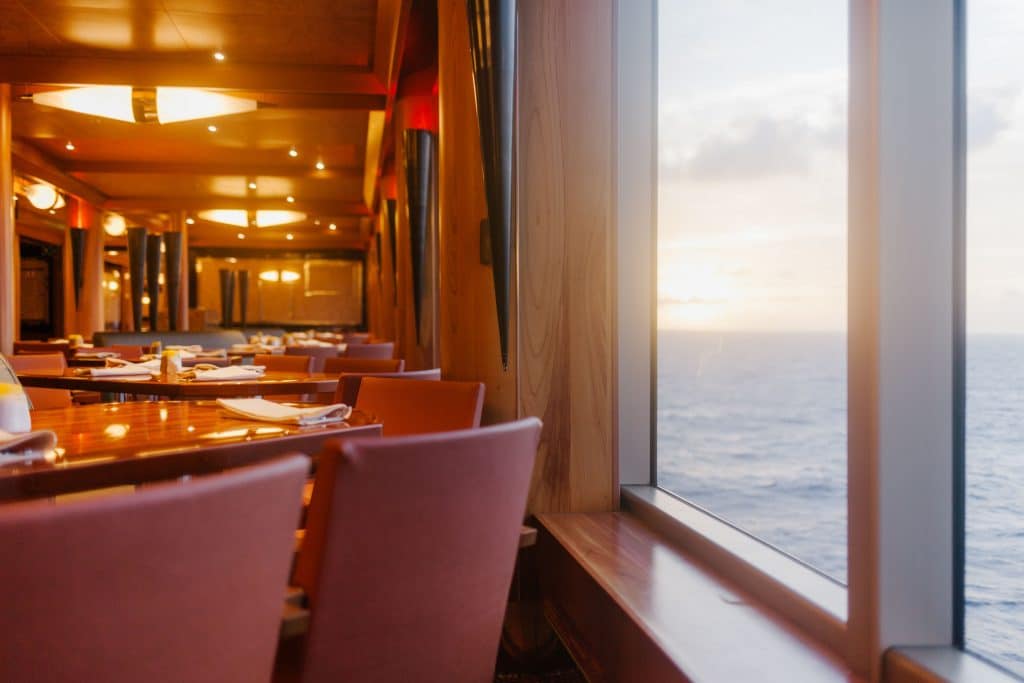
My family and I are at a stage where cruising works well for us. Everything is convenient and available any time you need it. What I don’t love is how much food there is EVERYWHERE.
My clients all worry before boarding: “How am I going to enjoy my cruise without gaining weight?”
The good news?
You don’t need to diet on your cruise.
You need a few high-leverage habits. They’ve worked for me on our last three cruises. And they’ve helped my clients set sail without needing to worry.
1. Don’t save all your calories for dinner
This is one of the most common vacation mistakes.
You wake up and think:
“We’re going to the fancy dining room tonight, so I’ll barely eat today.”
Then by 7 PM you’re starving.
Suddenly there’s bread, appetizers, cocktails, an entrée, sides and dessert in front of you—and everything sounds amazing.
Instead, eat normally throughout the day. A particularly useful strategy is to include protein at breakfast and lunch.
Research shows that higher protein intake can increase fullness and reduce hunger.
Cruise breakfast ideas
- Eggs + fruit
- Greek yogurt + berries
- Omelet + vegetables
- Oatmeal + nuts and seeds + milk or soymilk
- Smoked salmon + eggs + whole grain toast
You can absolutely have the waffle.
Just consider pairing it with protein rather than making breakfast entirely refined carbohydrates.
2. Do a buffet “recon lap”
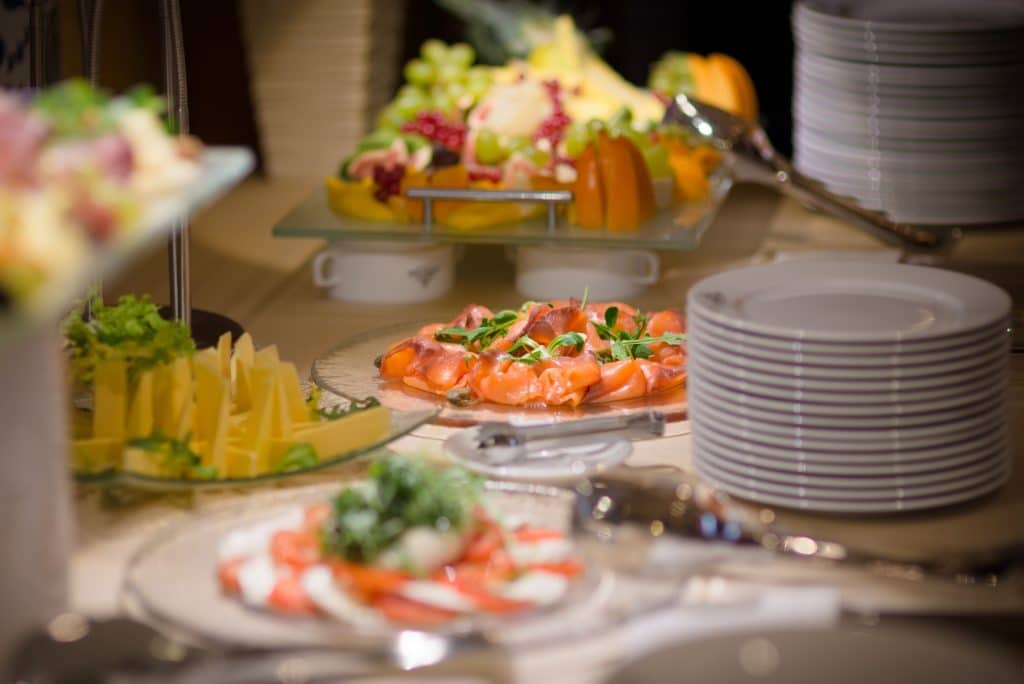
Here’s a surprisingly effective cruise strategy:
Don’t grab a plate immediately.
Walk through the buffet first.
Look at everything. Then decide what is actually worth eating.
Why?
Because portion size matters.
A systematic review and meta-analysis of randomized controlled feeding studies found that larger portions were associated with substantially higher daily energy intake—about 295 additional kcal/day in the studies analyzed.
That doesn’t mean you need to weigh your food.
Instead:
Try the “one intentional plate” strategy.
Choose:
Protein + vegetables/fruit + a starch + the foods you really want.
Then sit down and eat.
If you’re still hungry afterward?
Go back.
This is very different from mindlessly grazing because the buffet is there.
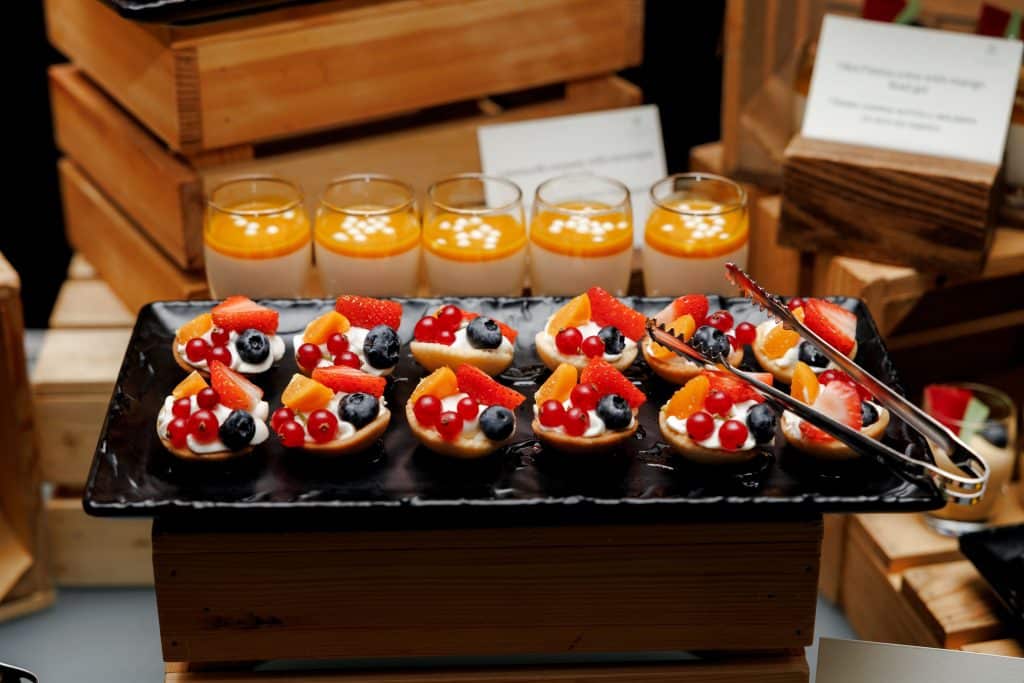
3. Eat dessert—but make it worth it
One of the worst vacation strategies is:
“I’m not allowed to eat dessert.”
Because then you spend the entire dinner thinking about dessert.
Instead, ask:
“What dessert is actually worth it?”
Maybe it’s the chocolate lava cake.
Maybe it’s the crème brûlée.
Maybe it’s the soft-serve cone while watching the sunset.
Have it.
But you don’t need to eat every cookie, cake, pastry and dessert simply because they’re available.
This is the 80/20 approach:
Most choices support your goals. Some choices exist purely because they’re delicious.
Both can belong on vacation.
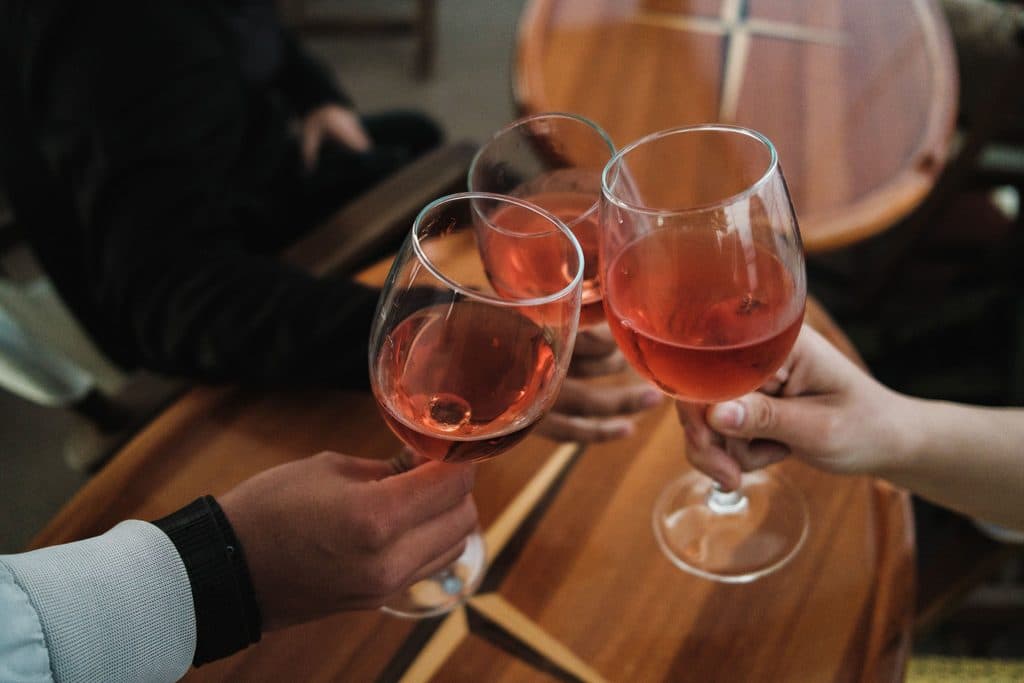
4. Alcohol is more than liquid calories
Here’s one of the more surprising pieces of research.
You might assume that if you drink 200 calories, your body will naturally compensate by eating 200 fewer calories.
That’s not necessarily what happens.
A systematic review and meta-analysis of 22 studies involving 701 participants found that alcohol consumption increased food energy intake as well as total energy intake compared with non-alcoholic conditions.
The researchers found an average increase of about 343 kJ (~82 kcal) in food intake and 1,072 kJ (~256 kcal) in total energy intake in the analyzed comparisons.
The researchers also cautioned that the evidence was primarily from younger adults and that some analyses had substantial heterogeneity.
So what’s the practical takeaway?
Not:
“Never drink on vacation.”
Instead:
Make your drinks intentional.
If you love the piña colada, have the piña colada.
You don’t need:
- A mimosa because it’s morning
- Wine because it’s dinner
- A cocktail because you’re at the pool
- Another cocktail because it’s included
- A nightcap because everyone else is having one
Choose the drinks you genuinely enjoy.
And drink water throughout the day.
5. Walk after meals—not to “burn off” food
This is one of my favorite cruise hacks.
You don’t need to hit the gym for an hour because you ate dessert.
Instead:
Take a 10–20 minute walk after meals when practical.
Walk:
🚢 Around the deck
🌅 During sunset
🎭 To the theater
🛍️ Around the ship
🏖️ Around the port
There’s also a metabolic reason to add this strategy.
A 2023 systematic review and meta-analysis of randomized crossover trials found that exercise after eating reduced post-meal glucose excursions compared with no exercise, and that exercise performed soon after a meal was more effective than exercising before the meal.
The studies were small and had a high risk of bias, so this shouldn’t be interpreted as a guarantee of a particular glucose response.
But a post-meal walk is an easy, low-cost habit with plenty of upside.
And it doesn’t need to feel like exercise.
Go for a stroll on the deck and look out at the ocean. Explore parts of the ship you haven’t seen yet. Check out the jogging track. It all counts.
6. Get enough fiber
Fiber can help promote satiety and keep your blood sugars on an even keel. This can prevent cravings and overeating at subsequent meals and snacks. Plus, fiber helps keep your digestion on point while you’re away from home.
Look for easy sources throughout the day:
- Berries
- Apples
- Pears
- Vegetables
- Oatmeal
- Beans/lentils
- Whole grains
- Nuts and seeds
The cruise goal:
Protein + plants at most meals.
Not perfection.
7. Don’t ignore sleep
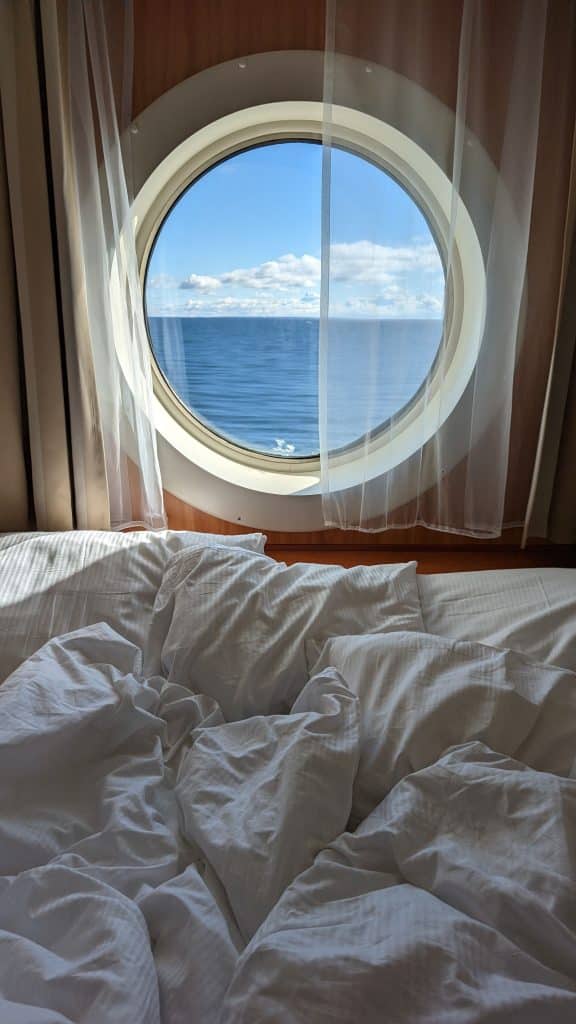
Cruise schedules can be brutal.
- Late dinner.
- Show.
- Drinks.
- Casino.
- Midnight pizza.
- 6 AM excursion.
- Repeat.
But sleep isn’t just about feeling rested.
A systematic review and meta-analysis of 41 randomized controlled trials found that sleep restriction increased subjective hunger and was associated with approximately 253 additional calories per day of energy intake, as well as modest weight gain.
Another systematic review of clinical trials similarly found that sleep restriction tended to increase energy intake, appetite, eating occasions and portion size.
So if you’re exhausted on day four of your cruise and suddenly feel like you need every pastry in the buffet?
It may not be a lack of willpower. You may simply be tired.
You don’t need to go to bed at 8 PM. But getting adequate sleep is a legitimate nutrition strategy.
8. Don’t try to “earn” your food
This is important.
- You don’t need to walk 15,000 steps because you had pizza.
- You don’t need to skip lunch because you’re going to a steakhouse.
- You don’t need to do an extra workout because you had dessert.
- And you definitely don’t need to come home and “detox.”
Instead, think:
I move because it makes me feel good.
I eat vegetables because I enjoy them and they support my health.
I eat dessert because it is delicious.
I drink because I want to enjoy a cocktail—not because the cruise is all-inclusive.
That’s a much more sustainable vacation mindset.
The 80 Twenty Cruise Formula
If you want one simple framework, use this:
At most meals:
1. Start with protein.
Eggs, Greek yogurt, seafood, chicken, lean meat, etc.
2. Add produce.
Fruit and/or vegetables.
3. Choose your carbohydrate.
Bread, pasta, rice, potatoes, dessert—whatever you actually want.
4. Choose the indulgence intentionally.
Not because it’s free.
Not because it’s there.
Because you really want it.
5. Move after meals when practical.
A walk around the ship counts.
6. Sleep.
Especially if you’re noticing your appetite getting harder to manage.
What NOT to do on your cruise
You don’t need to:
❌ Skip meals
❌ Avoid carbohydrates
❌ Avoid dessert
❌ Avoid alcohol completely
❌ Eat salads all day
❌ Count every calorie
❌ Exercise to compensate for food
❌ Feel guilty about enjoying vacation
Instead:
Eat well enough that you can fully enjoy the foods that make the vacation special.
That’s the goal.
Your Cruise-Day Example
Breakfast
Eggs + vegetables + fruit
Coffee or tea
Mid-morning
Enjoy the pool.
If hungry: Greek yogurt + berries or fruit + nuts.
Lunch
Grilled chicken/fish + vegetables + small handful amount of rice/potatoes
Afternoon
Enjoy the pool, excursion or activity.
If hungry: crudite with hummus or fruit and a small handful of nuts.
Dinner
Protein + vegetables + starch (small handful amount)
Plus the appetizer or dessert you really want.
After dinner
10–20 minute walk around the ship.
Evening
Enjoy the show.
Go to bed at a reasonable time.
The next day?
Repeat.
No detox required.
The Bottom Line
You don’t need to choose between “healthy cruise” and “fun cruise.”
You can have both.
The biggest wins aren’t usually dramatic.
They’re the boring-but-powerful habits:
Don’t arrive starving.
Build meals around protein and produce.
Be intentional with portions.
Choose alcohol because you want it—not because it’s available.
Walk after meals.
Get enough sleep.
And eat the dessert when it’s worth it.
That’s what the 80 twenty rule is all about.
Save this post before your next cruise and send it to your favorite cruise buddy. 🚢
References
Clark, M. J., & Slavin, J. L. (2013). The effect of fiber on satiety and food intake: A systematic review. Journal of the American College of Nutrition, 32(3), 200–211. https://doi.org/10.1080/07315724.2013.791194
Di Francesco, C., Messa, G., & colleagues. (2016). A prospective study on vacation weight gain in adults. Physiology & Behavior, 156, 43–47. https://doi.org/10.1016/j.physbeh.2015.12.028
Engeroff, T., Groneberg, D. A., & Wilke, J. (2023). After dinner rest a while, after supper walk a mile? A systematic review with meta-analysis on the acute postprandial glycemic response to exercise before and after meal ingestion in healthy subjects and patients with impaired glucose tolerance. Sports Medicine, 53, 849–869. https://doi.org/10.1007/s40279-022-01808-7
Kohanmoo, A., Faghih, S., & Akhlaghi, M. (2020). Effect of short- and long-term protein consumption on appetite and appetite-regulating gastrointestinal hormones, a systematic review and meta-analysis of randomized controlled trials. Physiology & Behavior, 226, 113123. https://doi.org/10.1016/j.physbeh.2020.113123
Kwok, A., Dordevic, A. L., Paton, G., Page, M. J., & Truby, H. (2019). Effect of alcohol consumption on food energy intake: A systematic review and meta-analysis. British Journal of Nutrition, 121(5), 481–495. https://doi.org/10.1017/S0007114518003677
Machalias, A., Ferguson, J. J. A., Guy, T., & Beck, E. J. (2026). Cereal fibers and satiety: A systematic review. Nutrition Reviews, 84(1), 47–68. https://doi.org/10.1093/nutrit/nuaf083
Rezaei, S., et al. (2021). Effect of sleep duration on dietary intake, desire to eat, measures of food intake and metabolic hormones: A systematic review of clinical trials. Clinical Nutrition ESPEN. https://doi.org/10.1016/j.clnesp.2021.07.029
Wansink, B., et al. (2022). Systematic review and meta-analysis on the effect of portion size and ingestive frequency on energy intake and body weight among adults in randomized controlled feeding trials. Advances in Nutrition.


Did You Make this Recipe?
Tag @80twentyrule on Instagram and hashtag it #80twentyrule
